The 1829 emigrants and the Lamlash memorial
The memorial on the Lamlash shore remembers Arran families who sailed for Canada in 1829, against a wider history of changing farms and cleared settlements.
What happened to the tenants?
In the early 19th century, the Hamilton estate on Arran reorganised farms and moved many tenants from the land. The old joint-tenancy farms, called clachans, were replaced by single-tenant farms and sheep walks. That is the central change behind this story: not simply people leaving the island, but a different organisation of the land and who lived on it.
The facts are stark, but the change is not abstract. A farm system was replaced by another, and tenants were moved. It is worth keeping those parts together. The 1829 sailing was one departure within that upheaval, rather than an isolated journey with no connection to the island’s landholding.
Why does 1829 matter?
In 1829, families from Glen Sannox and other parts of Arran sailed for Canada on the brig Caledonia. They settled in Megantic County in Quebec. Those details give the event its particular shape: families left from more than one part of Arran, travelled together on a named vessel, and made a home in a named part of Canada.
That is enough to make the journey distinct without turning it into a complete account of every family’s experience. The facts establish the departure and the settlement, not the private thoughts or circumstances of each person aboard. The story is stronger for staying with what can be said: in the same period as the reorganisation of farms, families went from Arran to Canada.
Was this the only departure?
No. More island families left for Canada and other countries throughout the 19th century. The sailing of the Caledonia is a particular event within a longer movement. It should not be made to stand for every departure, or used to suggest that every family left for the same reason or in the same way.
Nor does the 1829 story end with the voyage. Its destination matters: the emigrants settled in Megantic County in Quebec. Arran and that place belong in the same account, even if the facts here do not supply the individual stories in between.

The emigrants’ story begins on the glen the emigrants left, but it also reaches beyond the island. That link is useful as a reminder of the land they came from, not as a substitute for the destination where they settled.
What does the Lamlash memorial remember?
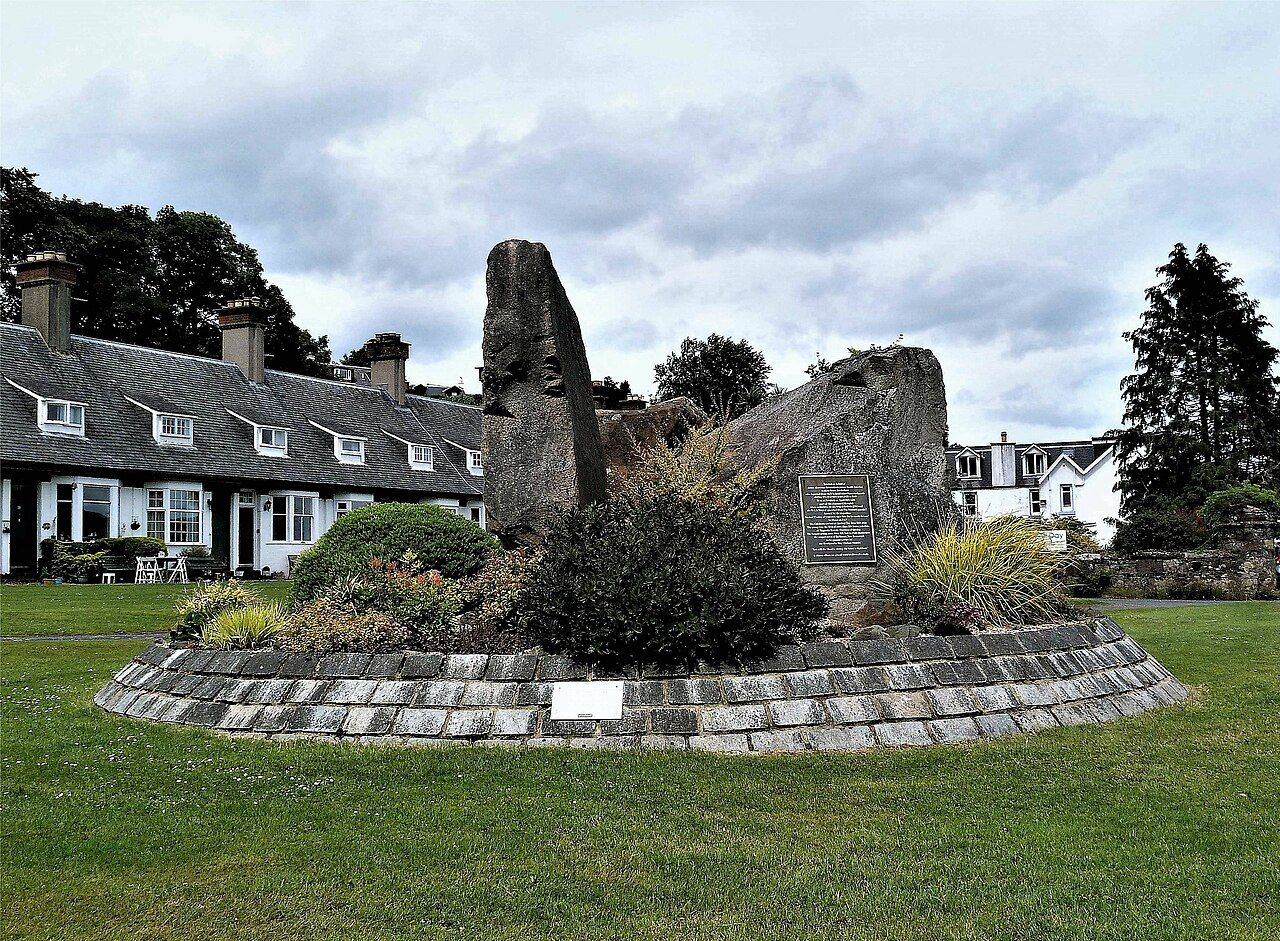
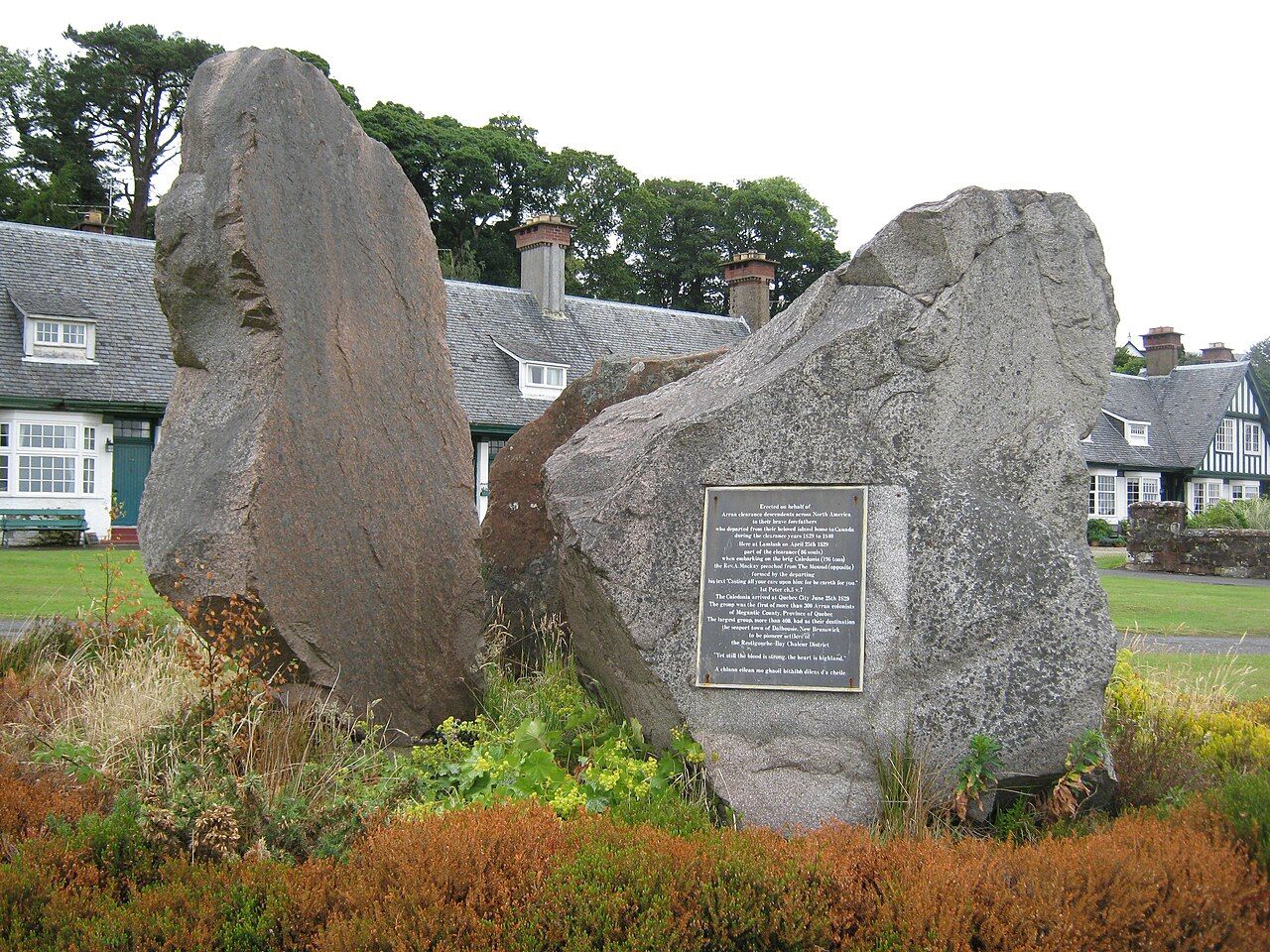
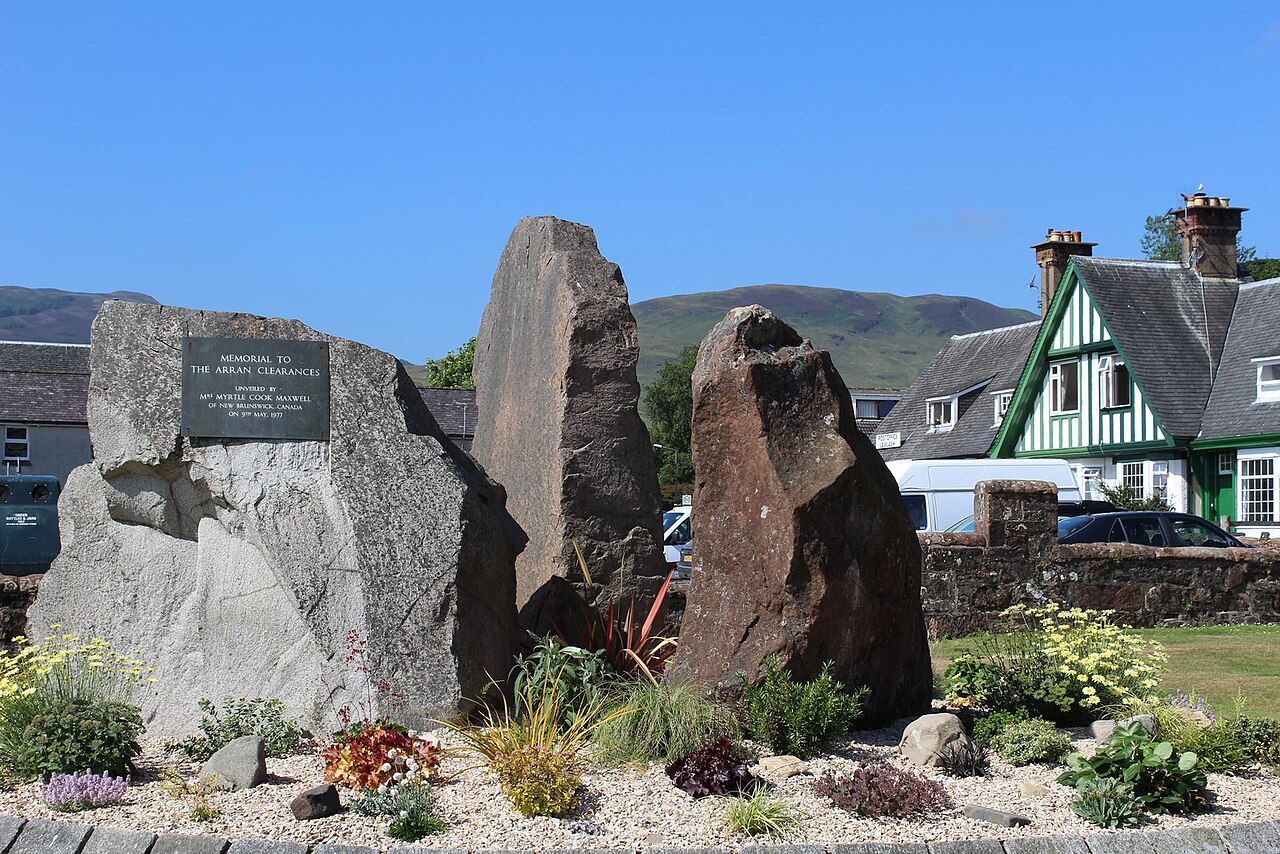
A memorial on the shore at Lamlash remembers the emigrants of 1829. It was put up in 1977 by descendants of the emigrants living in Canada. The distance between the departure and the memorial gives the act of remembrance its particular weight: descendants in Canada marked an event connected to Arran by placing a memorial on its shore.
The memorial’s focus is specific. It remembers the emigrants of 1829, rather than every island family who left during the 19th century. That distinction matters. A memorial gives a particular event a place in public memory; it cannot carry the whole history of changing farms, displaced tenants and later departures by itself.
The Lamlash memorial remembers one departure, not the whole history of Arran’s clearances.
The Lamlash memorial remembers one departure, not the whole history of Arran’s clearances.
Its meaning comes partly from that limit. The monument is tied to a known sailing and to descendants who chose to remember it. The larger history remains wider than the memorial, but the event does not become less important for being one among many.

What remains of the cleared settlements?
Ruins of cleared settlements can still be found in several glens on Arran. They make the consequences of land change part of the island’s present landscape, though a ruin alone cannot tell the full story of the people who lived there or where they went. It is a direct reminder that the history is not only about a ship leaving in 1829.
At Catacol, the Twelve Apostles were built for families moved off the land in the 1860s. They belong to a later moment than the Caledonia sailing. That difference is worth holding on to: one memorial remembers emigrants of 1829, while these houses were built for families moved off the land in the 1860s.
The the terrace built for cleared families offers another point of comparison. And the the estate's seat at Brodick belongs to the wider estate story; it does not, on its own, explain the experience of the tenants who were moved.
Why keep the event distinct from the wider history?
Because a precise account is more useful than a broad label. The 1829 emigrants came from Glen Sannox and other parts of Arran, sailed on the Caledonia and settled in Megantic County in Quebec. The memorial was put up in 1977 by their descendants living in Canada. Those facts create a clear line between departure, settlement and remembrance.
Set beside the wider pattern, that line also shows what the memorial cannot do. More island families left for Canada and other countries throughout the 19th century; the memorial does not name all those journeys. The cleared settlements and the later families at Catacol add other parts of the story, not footnotes to this one.
The memorial on the Lamlash shore is worth reading as both a marker of one event and a prompt to look beyond it. How many other departures belong in the landscape beside this one?