The short ferry across Kilbrannan Sound
A small ferry links Lochranza and Claonaig in about half an hour. Its appeal is less grand arrival than a useful back door to Arran.
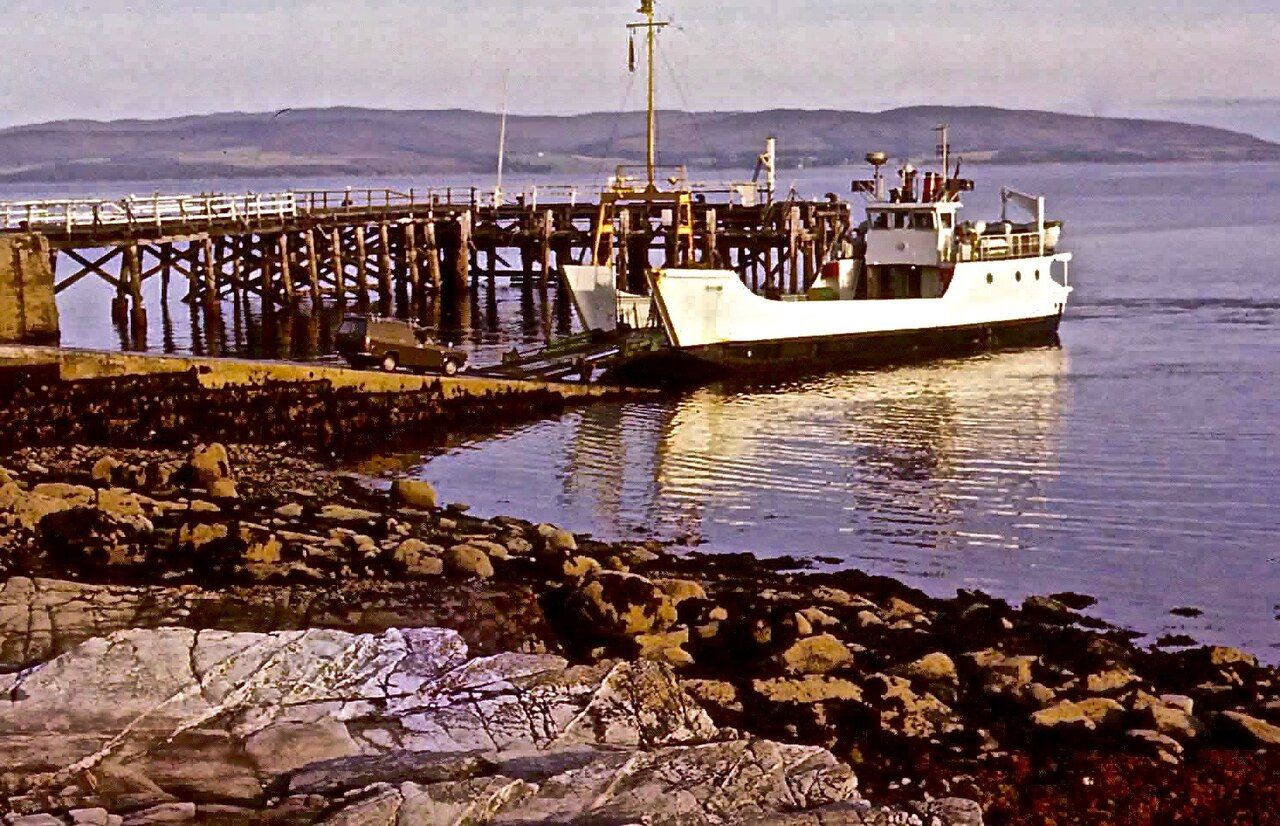
Is a half-hour crossing enough to change the shape of a journey? The small ferry between Lochranza and Claonaig offers a different way across Kilbrannan Sound: a back door to Arran, rather than the island’s more familiar connection. The crossing takes about 30 minutes, which is long enough to feel like a passage, but not an expedition.
Claonaig is a slipway and little else, at the end of a single-track road on Kintyre. That spare arrival is part of the route’s appeal. There is no grand landing to compete with the reason for coming; the ferry simply joins two places, and leaves the rest to the road beyond. For a crossing that is small in scale, it opens up a useful connection.
On the Arran side, the approach to Lochranza gives a view of the castle on its spit. The village and its ferry slipway belong together in the imagination, which is why the deer village at the slipway makes a fitting companion to the crossing. The view from the water is a good argument for arriving by ferry, rather than treating the boat as merely a link between roads.
The route usually runs in the summer timetable from spring to autumn. In winter, the Lochranza ferry has sailed to Tarbert on Loch Fyne instead of Claonaig. The distinction matters: this is not quite the same crossing in every season, and the Claonaig route has its own seasonal character.
Cyclists often use the ferry to connect Arran with routes on Kintyre. That gives the crossing a purpose beyond the view, though the view is a strong part of its case. The appeal of the waters the ferry crosses is not only the scenery, and the huge sharks of summer are sometimes seen from the boat in summer. They are a chance encounter, not the point of the journey; still, they lend the passage a little more life.
As an alternative to the main Arran crossing, this is a quieter-feeling way to arrive, with a castle view on one side and a slipway at the other. Does the back door make the island feel closer, or simply give the journey a different shape?