Drumadoon: columns of cooling rock
At Drumadoon Point, a quartz-porphyry sill cooled into tall columns beneath an Iron Age fort. The result is geology with an architectural edge.
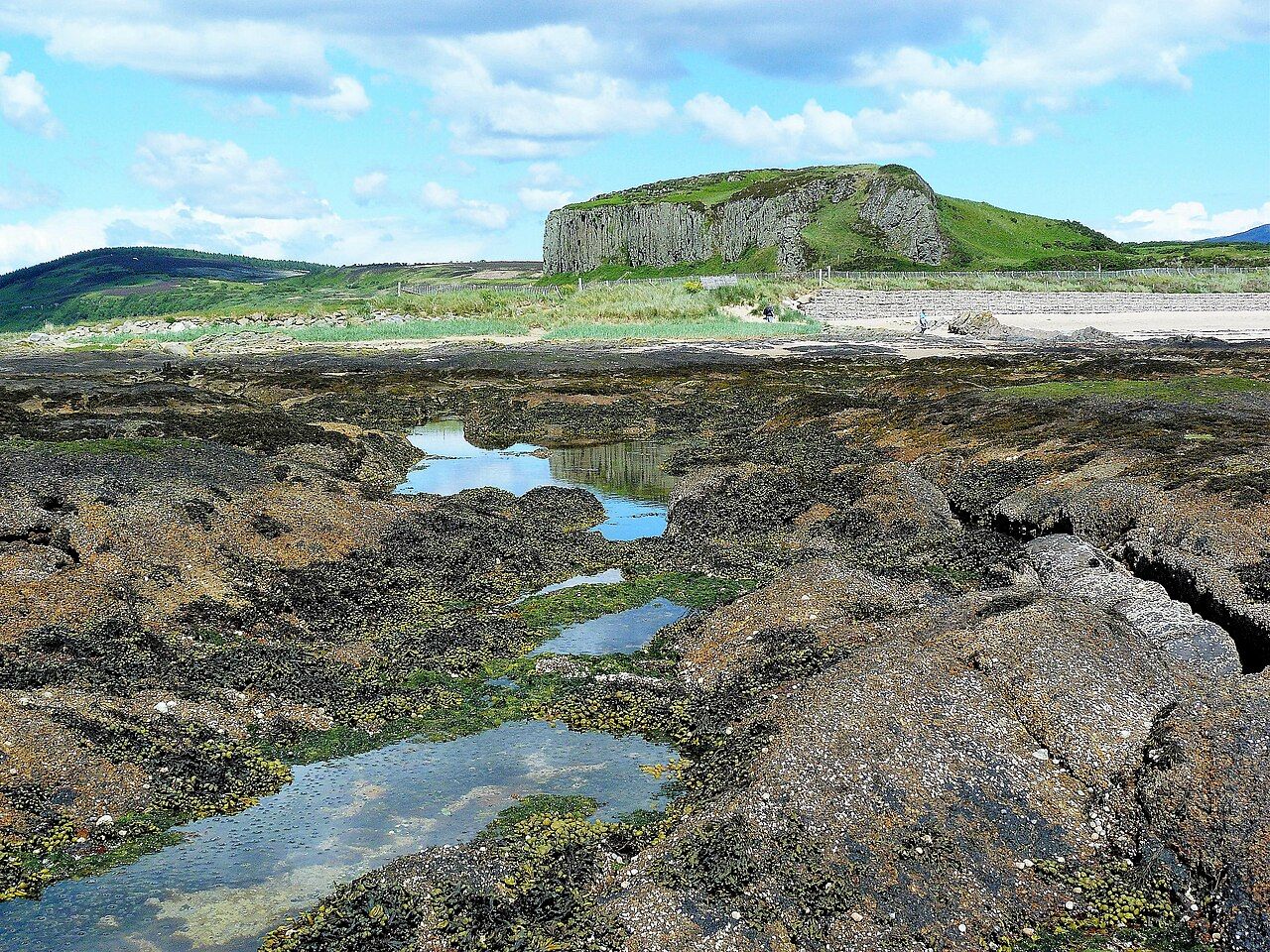
What makes a cliff look built? At Drumadoon Point, the answer is cooling rock. The point on Arran’s west coast is formed by a thick sill of igneous rock, and its tall columns have the orderly look of something arranged by hand.
A sill is a sheet of molten rock that forced its way between existing layers and hardened. At Drumadoon, that rock is quartz-porphyry. As it cooled, it formed columns like those at the Giant’s Causeway. The comparison is useful, but Drumadoon has its own clear character: a high wall of stone, rising about 30 m above the shore, with columns visible as its defining structure.
The columns are not an ornament added to the landscape. They are the landscape’s main event. Their straight sides give the cliffs an architectural quality, though there is no need to mistake that appearance for human design. The geological explanation is stronger than the metaphor: a sill cooled into columns, and the columns now stand in a cliff.
Some have fallen. Heaps of columns lie at the foot of the cliffs, a reminder that this formation is not only a vertical face. The change from upright stone to fallen blocks is a pleasing counterpoint; it makes the scale of the columns easier to grasp, without diminishing the cliff above.
At the top is an Iron Age fort called The Doon. Its position gives the rock a second kind of architecture, this one made by people, though the cliffs remain the more compelling structure. The fort does not need an invented story to add interest. Its presence on the summit is enough.
Drumadoon lies on the shore route between the harbour village to the south and the caves further north. Elsewhere in the island’s stone landscape are the dykes on the southern shore. Drumadoon is the place where rock most plainly resembles a design: less because it imitates a building than because cooling gave it such a strong, repeated form.