Red deer of the northern hills
From calves in late spring to roaring stags in autumn, Arran’s red deer follow a year shaped by the northern hills, the shore and a long fence.
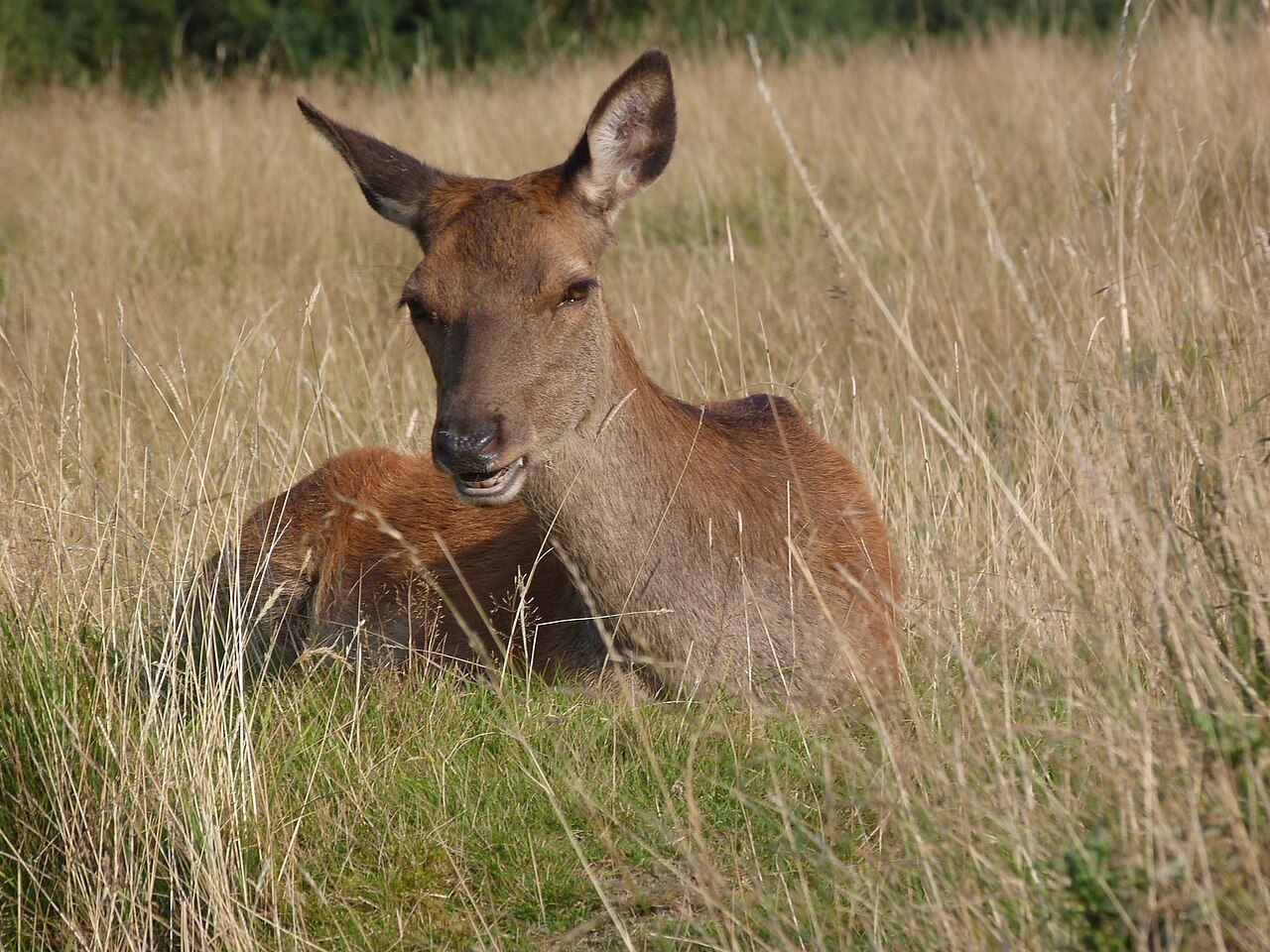
At Lochranza, red deer are not only a presence in the hills: they often come down to the shore and village greens. It is a striking contrast, and a useful introduction to an animal whose life on Arran is tied to the island’s north. The fence, the seasons and the deer’s movement between high and low ground make a more interesting story than the roar alone.
Where do Arran’s red deer live?
Red deer live mainly in the northern half of Arran. A long deer fence across the island keeps most of them in the northern hills and away from southern farmland. That is a substantial division in the way the island is managed: the deer are not simply spread evenly across it.
The line of the fence matters, but it is not the whole story. Deer move to lower ground in winter to find grazing, and they often reach the shore and village greens at Lochranza. The hill is their main setting, not an absolute limit on where they appear.
Why is Lochranza part of the story?
Because the deer come down there. In the village where deer graze, the animal that might seem remote in a description of northern hills becomes a familiar presence at the edge of everyday village space. That shift in setting is more revealing than another account of deer as distant shapes on a hillside.
There is a difference between knowing that red deer live on the island and recognising how their year brings them into view. Lochranza gives the story a shore as well as a hill. It is a detail worth keeping in mind when the rut attracts most of the attention.
When are the calves born?
Red deer hinds give birth to calves in late May and June. This is the beginning of the year’s clearest cycle: calves arrive as the stags’ new antlers are growing, and the autumn roar is still some way off. The facts are simple; the contrast between those stages is what gives the year its shape.
There is no need to turn calving into a grand spectacle. It is a key part of the deer’s year, but the quieter fact is enough: the hinds give birth in late May and June.
What happens to the stags’ antlers?
Stags shed their antlers in spring and grow new ones over the summer. It is a change that gives the year a visible measure, from what is lost to what returns. The new antlers belong to the long interval before the rut; they are not just decoration for an autumn scene.
That seasonal change is one of the more satisfying details in the story because it is precise without needing embellishment. Spring brings the shedding, summer the growth, and autumn the roar. The stages are distinct, though the deer’s life does not reduce neatly to a calendar.
When does the rut take place?
On Arran, the rut runs mainly from late September to October. During it, stags roar. That sound gives the season its reputation, but the timing is the useful fact: the rut belongs chiefly to autumn, after the calves’ arrival and the summer growth of antlers.
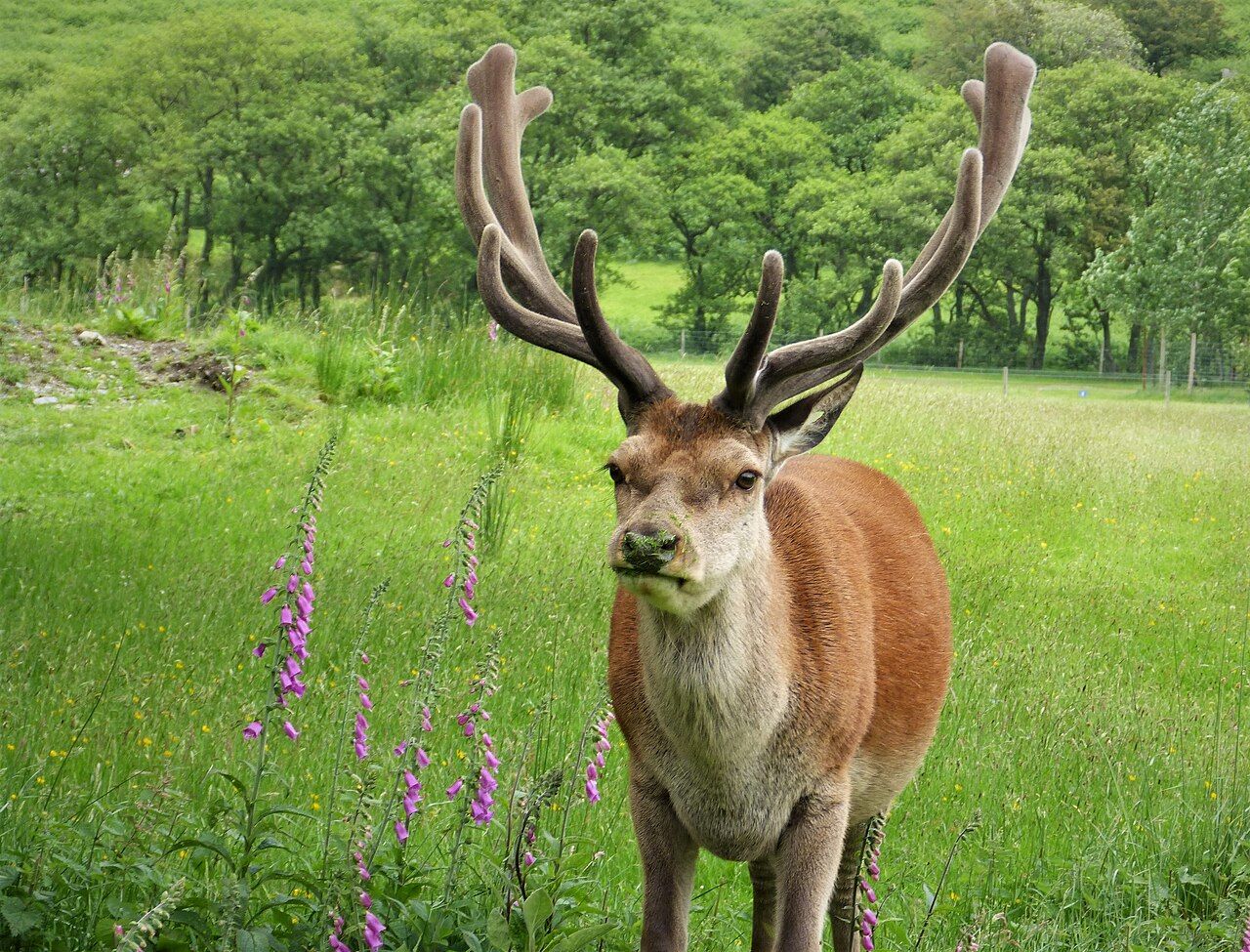

The roar is an arresting part of the account, but it can eclipse the rest of the year. A deer story made only of autumn noise misses the spring shedding, the summer growth and the late-spring calves. The rut matters; it is not the whole show.
What does winter change?
In winter, red deer move to lower ground to find grazing. This helps explain why their presence is not fixed to the high northern hills, even though most live in the north and the fence keeps most away from southern farmland. The seasonal movement is a modest fact, but it prevents an overly tidy picture.
The island’s deer year is therefore not a procession from one dramatic event to the next. It includes a practical shift in where the animals look for food. The hills remain central to the story, but winter draws the deer down.
How are deer numbers managed?
Deer numbers on Arran are managed by culling on the hill estates. That belongs in any honest account of the red deer, alongside the calves and the rut. A description that treats the animals only as a spectacle leaves out the management that forms part of their place on the island.
The phrase venison from the hill brings that question close to the table, while the fact itself is plain: culling is how deer numbers are managed on the hill estates. It is not a detail to hide behind the romance of the roar. Nor does it need a louder verdict than that.
Is the story only about the north?
The north is the centre of it, not a complete boundary. The fence keeps most deer in the northern hills and away from southern farmland, while winter movement and the Lochranza shore show that the animals do not stay in one kind of ground. The contrast is the point: a managed northern population, with seasonal movement within its wider landscape.
There is room in that picture for the long empty glen as an idea of wildness, but the deer are not made more interesting by pretending they belong only to remote hills. They come down to village greens; they move to lower grazing; they are managed. The red deer of Arran are worth attention precisely because the story is not just a roar in autumn.
Arran’s red deer are worth attention precisely because the story is not just a roar in autumn.
Arran’s red deer are worth attention precisely because the story is not just a roar in autumn.