The Giants' Graves above Whiting Bay
A steep climb reaches two Clyde cairns in a forest clearing, where the northern tomb’s upright stones and the view to Holy Isle carry the story.
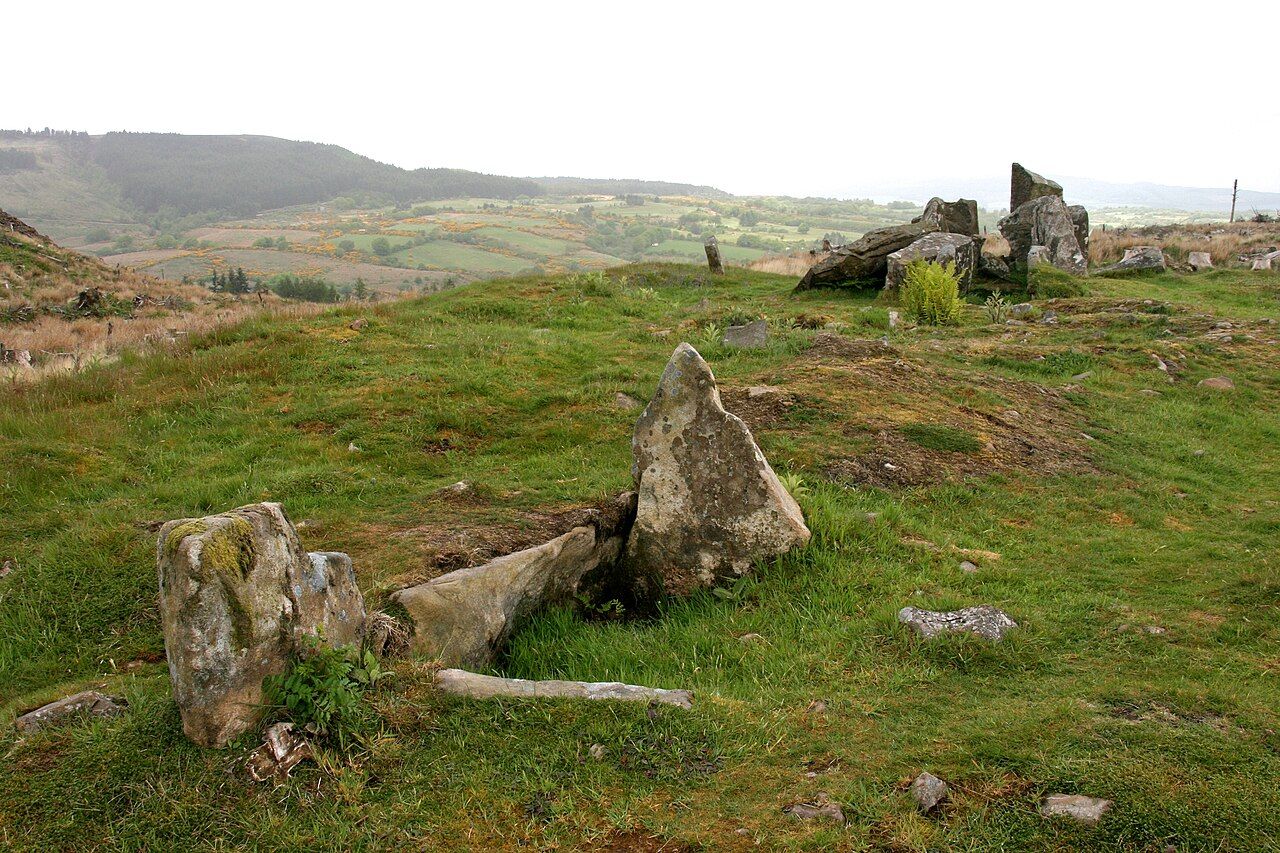
What makes two old tombs worth a steep climb above Whiting Bay? The answer is not a single grand monument, but a pair of Neolithic chambered cairns in a forest clearing. Their setting and their difference in condition give the place more interest than a simple stop at a stone structure.
The path climbs steeply from the Glenashdale track, and that is the main effort of reaching them. It also links the cairns with Glenashdale Falls in a loop, so the double waterfall nearby belongs naturally in the same walk. There is little point pretending the climb is incidental: it shapes the visit.
The northern cairn is in better condition than the other, with a forecourt of upright stones. That gives it a clearer presence, while the pair as a whole keeps the site from becoming only a study of one structure. The distinction matters; the two are not interchangeable.
Excavations found pottery, flint tools and burnt bone. The name Giants’ Graves comes from the old belief that only giants could have moved such stones. It is a strong name for a site whose appeal lies in the physical weight of the stones, though the finds bring the story back to the people who used the cairns.
The Giants’ Graves are of the Clyde cairn type, and the island seen from the clearing adds a second reason to stop. It is not just a point in the distance; it gives the clearing its own sense of direction. For a southern counterpart, there is a tomb in the south, but the strength here is plainly the paired cairns.
The site rewards interest in both the burial structures and their setting, without needing a grander claim. The nearby falls make a natural companion, while the cairns remain the reason to take the steep path. What else might the clearing have meant to the people who built them?